

Self-Doxing for Kleos
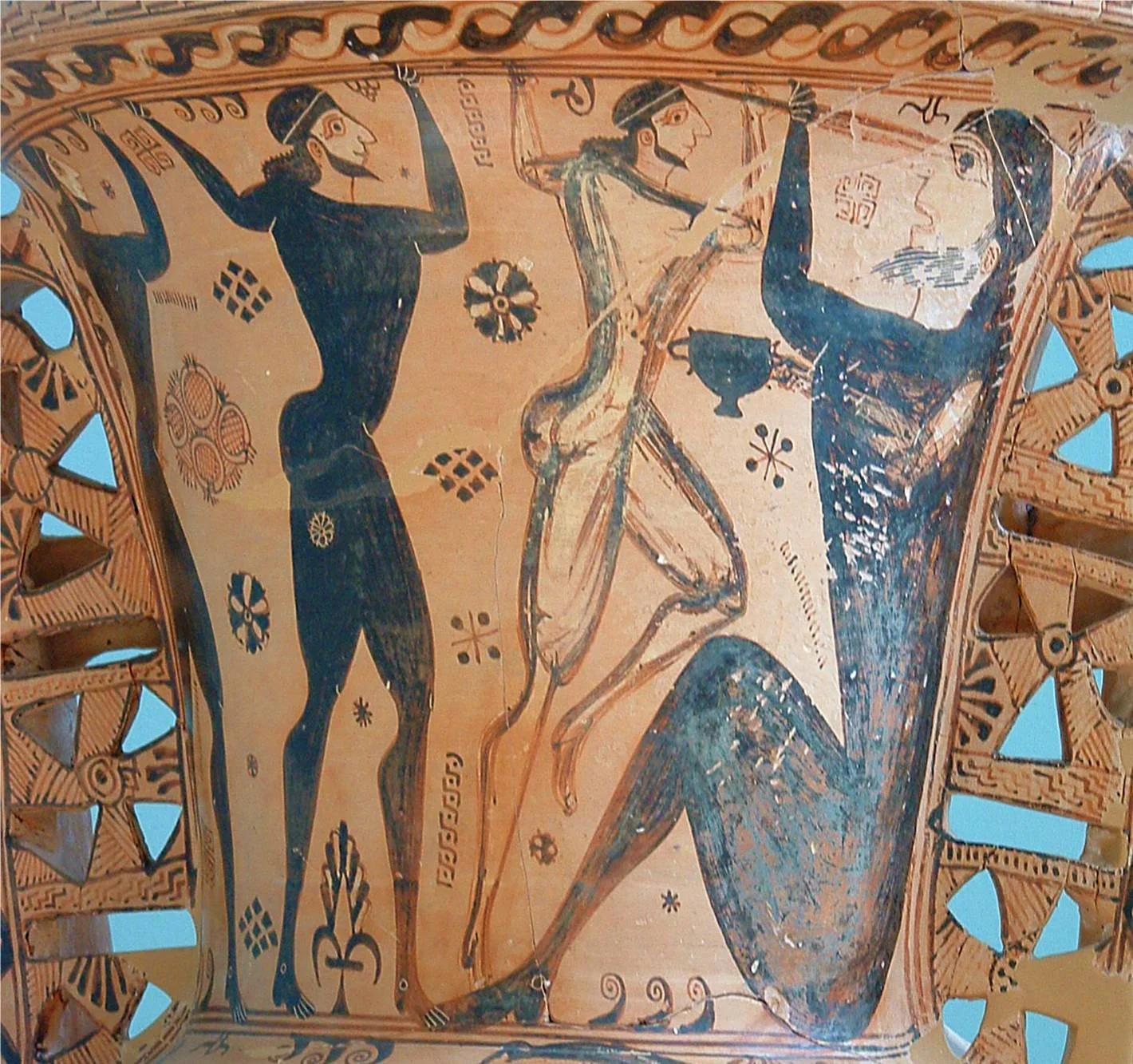
Eleusis Amphora: funerary proto-Attic amphora. Detail of the neck: Odysseus and his men blinding the cyclops Polyphemus.
https://commons.wikimedia.org/wiki/File:Polyphemus_Eleusis_2630.jpg

Even for individuals who haven’t read the epic in full, Book 9 of the Odyssey is best known for the blinding of Polypheus the Cyclops, son of Poseidon. The blinding of the Cyclops is chronologically near the beginning of Odysseus’s journey home to Ithaca from the Troy. Despite the epic portraying Odysseus’ journey as a heroic one, contemporary readers may question his decisions as a leader of his crew, and the decisions he makes on his journey. The encounter with the Cyclops, and his conflict with Poseidon as a result of it, causes the delay of his return and reunion with his wife and son. It also serves indirectly as a cause of the suffering of Penelope and Telemachus who must maintain order in Ithaca during Odysseus’ absence.
This made me think beyond Odysseus as a tragic hero as he is perceived in media culture such as Troy (2004) but rather from a contemporary viewpoint, focusing on how his actions have a wider impact on his family and nation within the epic, such as his son Telemachus who serves as a secondary point of view. Odysseus’ son serves as the eyes into Ithaca and the disruption which is taking place due to his father's absence.
When fleeing Polyphemus, Odysseus willingly defies the wishes of his crew by attempting to aggravate the cyclops further. Rather than experiencing these events during Book 9 itself, he is recounting it to the Phaeacians instead, which as a narrator recounting this event, Odysseus himself is in control of what information he chooses to share and withhold from his audience. It is notable that he chooses to disclose that while escaping the Cyclops that he deliberately acts against the concerns of his crew to taunt him further. He tells the Phaeacians; ‘my crew begged me to stop, pleading with me’ (Od. 9:492-493) in response to his actions to continue antagonising Polyphemus, offering insight into Odysseus’ character not only as an individual but as a leader of his crew, head of his family and king of Ithaca. He chooses to pursue kleos, personal triumph against his enemies at the cost of putting both his family and crew in danger.
Odysseus successfully uses his intelligence and cunning to overcome the obstacles in his journey such as disguising his identity as ‘Nemo’, which allows him and his crew to escape the Cyclops' cave. However he later jeopardises this attempt by revealing not only his identity but the name of his father and home polis to Polyphemus upon announcing his triumph. Although this may have been an act of victory to announce to Polyphemus that he had been fooled by his cunning, the information he chooses to provide not only endangers himself and his crew, and also the whole of Ithaca, of possible retribution not only from the Cyclops but from one of the gods.
This event highlights how Odysseus’s flaws as an individual and a leader impact his journey home and the stability of his family and city state. As the central theme of the epic is nostos, his homecoming and reunion with his family and resuming his position as king. As a leader he is not obligated to always heed the advice of his crew, his decision to continue to berate the Cyclops is driven not by his professional judgment but by personal anger, recounting ‘But my tough heart was not convinced. I was still furious,’ (Od. 9:500-501). This choice, motivated seemingly by arrogance, causes suffering for himself and his efforts to return to Ithaca by making an enemy of Poseidon, who - unknown to him at this point in the poem - is Polyphemus’s father. Although unable to prevent Odysseus from eventually reaching Ithaca, Poseidon's grudge against him results in extending Odysseus’s journey home and the loss of his crew, leaving him the sole survivor upon his return.
The king’s time away from Ithaca indirectly intensifies the threat of the suitors on his household, putting his son in danger of harm by them and piling pressure on Penelope to accept Odysseus’s death and remarry. The suffering of Odysseus’s family and closest companions is a consequence of his selfish decision to proclaim victory over Polyphemus rather than taking advantage of the opportunity to escape the Cyclops anonymously.
About the Author
I initially took Classics as a National 5 because I was interested in mythology. I had the opportunity to read a section of the Odyssey for my National 5 exam and eventually the whole text as an elective during my first year of university. My degree so far has taught me to analyse characters pop culture typically portrays as heroes in closer depth, and has required me to think beyond the depictions of Greek epics I had seen in movies. This is all the more necessary with Christopher Nolan’s Odyssey coming out next year. This is an adaptation of a section of my very first assessment for Classics in first year, of which I am very proud.